
Necessidades
Adult Dog Weeing Indoors: Causes and How to Solve It
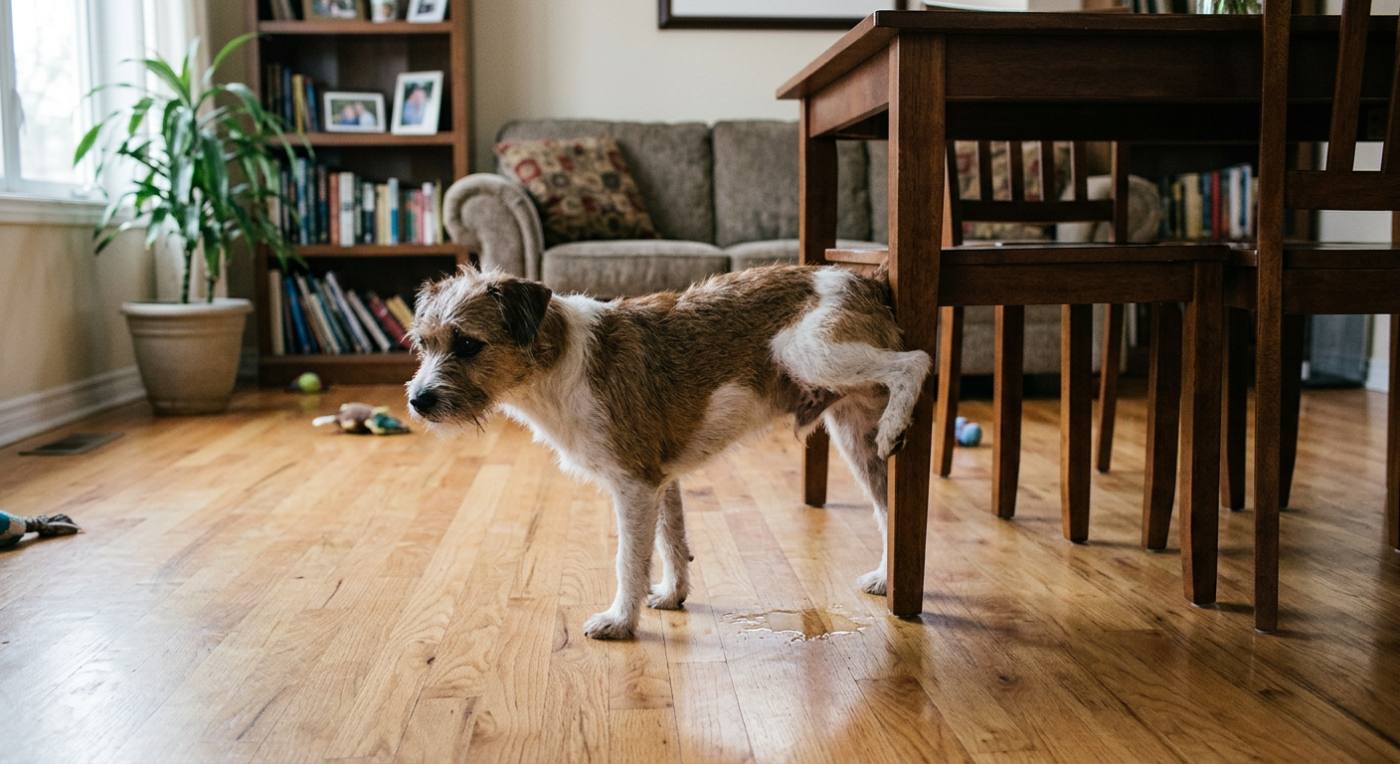
When an adult dog keeps — or starts again — toileting indoors, the first question is not “how do I correct it” but “why”. Unlike a puppy that is still learning, an adult soiling indoors is almost always saying something has changed: a health problem, anxiety, a gap in the original training or a habit that was never properly consolidated. Identifying the right cause is what decides the solution — treating everything as “lack of training” wastes time and sometimes ignores a medical problem. First step, always: rule out a medical cause. If your dog was clean and suddenly started going indoors, the priority is to find out whether it is a health issue. Urinary infections, kidney problems, diabetes, incontinence (common in older dogs) or pain that makes going out difficult can be behind it. No training solves a physical problem. The most common causes, after health: training that was never consolidated, common in dogs adopted as adults; anxiety — dogs that soil mainly when left alone may have separation anxiety, not a hygiene problem; urine marking, in small amounts on vertical, strategic points, which is territorial communication and is treated in its own way; changes in the environment or routine; residual smell in poorly cleaned spots; and lack of opportunities to go out. How to solve it, according to the cause: confirm health first; if the training is fragile, go back to basics as if from the beginning, with a routine of trips to the right place, supervision and rewarding what goes right; if it is linked to being alone, treat the separation anxiety — the wee is a symptom, not the cause; if it is marking, the territorial and emotional component is worked on (neutering can help in some cases, but rarely solves it alone); eliminate the smell with Chemz in every accident spot, because ordinary detergent is not enough; and adjust the opportunities, with more trips outside at key moments. Why punishment is still the worst path: just as with a puppy, punishing an adult for soiling indoors teaches it to hide to go, and treating marking as if it were a training gap; and ignoring the pattern of when and where it happens, which is the clue that reveals the cause. Frequently asked questions. My adult dog was clean and started going indoors again, why? A sudden regression often points to a medical cause, anxiety or a change of routine. How do I know if it is a training or a health problem? You cannot know for sure without ruling out health first; a sudden change, blood in the urine, drinking much more or straining to urinate are signs to go to the vet right away. My dog only goes indoors when left alone, is that lack of training? Often it is not — it is a possible sign of separation anxiety. What is marking and how do I tell it apart? Small amounts of urine on vertical surfaces, often at strategic points. Does neutering solve a dog that goes indoors? It can help in some marking cases, but rarely solves it alone and does not correct training gaps or anxiety. If your adult dog keeps toileting indoors and you live in Greater Lisbon, Cascais, Oeiras — or need online guidance — a 360º Assessment helps identify the cause and build the right plan.
Need help with your dog? André Alves works at home across Greater Lisbon and online worldwide.