Passeios
Dog That Pulls on the Leash: How to Teach It to Walk Well
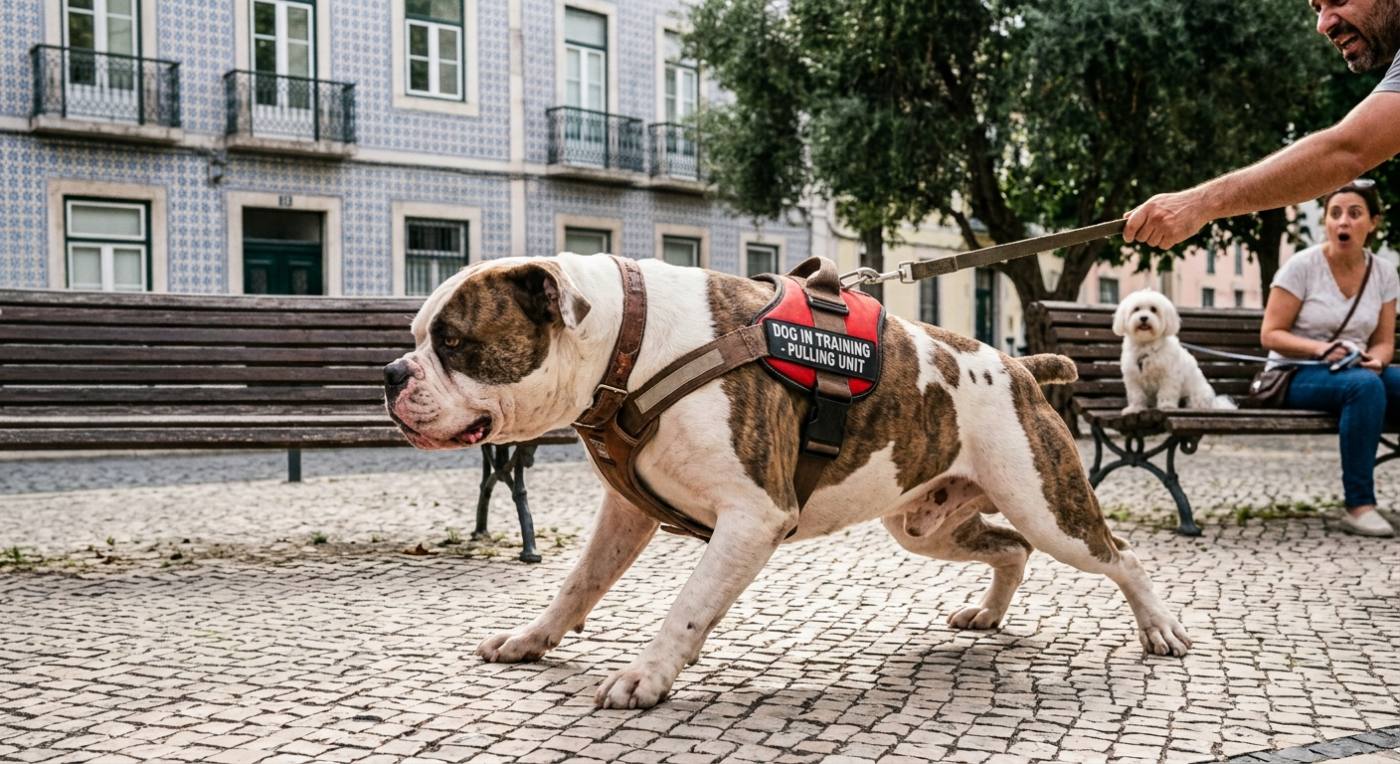
A dog that pulls on the leash is not being dominant or stubborn — it is simply doing what works: pulling gets it where it wants to go, faster. Every walk in which it pulls and the walk carries on is a lesson teaching it that pulling pays. The solution, therefore, is not force — it is reversing that lesson: teaching that a loose leash keeps the walk going and a tight leash stops it. With consistency, almost every dog learns to walk well.
Why your dog pulls: because it works — pulling moves the walk forward and the behaviour is rewarded dozens of times a day; the opposition reflex — when they feel tension on the leash, dogs instinctively pull against it, and a tight leash creates more tightness; excess arousal — a dog that leaves the house in a state of euphoria pulls because its body is already racing; and because the human pace is painfully slow for a dog eager to explore. If, on top of pulling, your dog also reacts by barking or lunging, there is an emotional layer underneath and the problem is a different one.
The principle that solves it. The whole technique rests on one simple, non-negotiable rule: a loose leash keeps the walk going; a tight leash stops it. The dog learns from its own experience that pulling gets it nowhere — and that slack is what opens the way. Simple to understand, demanding to apply, because it requires total consistency: if pulling works one time in ten, the dog keeps trying to work out when that time will come.
Step 1 — Start before the door. A dog that leaves the house in euphoria is already going to pull. Only go out when it is calm. That single habit changes half the problem.
Step 2 — Choose the right equipment. A fixed leash of 1.5 to 2 m, never an extendable one. The right collar helps you manage while you teach — but no piece of equipment teaches on its own.
Step 3 — Change direction when the leash goes tight. As soon as the dog pulls, change direction. The dog quickly connects the dots: pulling = going the opposite way.
Step 4 — Reward slack and check-ins. When the dog walks with a loose leash or looks at you, mark and reward. You are teaching it what you want, not just blocking what you don't.
Step 5 — Calm turns and changes of direction teach the dog to pay attention and stay with you instead of dragging you, even before it pulls.
Step 6 — Start easy, raise the difficulty. Train first in a calm place, such as a yard or quiet street, and only then in more stimulating environments. Asking for a perfect walk in the middle of chaos from the start is a recipe for frustration.
Mistakes that keep the pulling alive: an extendable leash, which teaches the dog that pulling works; giving in “just this once” and letting the dog pull to the lamppost, which erases all the work; pulling back, which feeds the opposition reflex and turns into a tug of war; leaving the house with the dog jumping around and hoping it calms down in the street; and inconsistency between family members — if one lets the dog pull, nobody solves it.
Frequently asked questions. How do I teach my dog not to pull? Teach that a loose leash moves the walk forward and a tight one stops it: stop every time it pulls and reward slack. How long does it take for a dog to stop pulling? It depends on consistency and how ingrained the habit is; with daily, coherent work, many dogs improve within weeks. Which equipment is best? A short fixed leash of 1.5 to 2 m; suitable collars help you manage and the choice depends on the dog, but equipment manages, it does not teach. Does an extendable leash help with the transition? No, it makes things worse. My dog pulls and barks at other dogs — is that the same thing? No. Pulling is walk training; barking and lunging is reactivity, an emotional matter worked on differently. They often coexist.
Need help getting your dog to walk well on the leash? If walks are a struggle and you live in Greater Lisbon, Cascais, Oeiras — or need online guidance — a 360º Assessment helps build the right plan for your dog.
Need help with your dog? André Alves works at home across Greater Lisbon and online worldwide.