Agressividade
Canine Aggression: Types, Causes and Rehabilitation
Aggression in a dog is almost never “badness” or a character flaw — it is a behaviour with a function, usually to create distance from something the dog perceives as a threat. Growling, baring teeth, lunging or biting are the top of a scale of warnings that started much earlier, in subtle signals that went unnoticed or were ignored. Understanding the cause and the function is the first step to rehabilitating safely — and most cases have a solution.
Aggression is not dominance. For decades “dominance” was blamed: the dog that wanted to “be pack leader”. Behavioural science has abandoned that model. In the vast majority of cases, an aggressive dog is a frightened, insecure, anxious, aroused, frustrated or painful dog — not a dog trying to dominate anyone. This matters because treating aggression by confronting and “showing who's boss” can increase fear and worsen the behaviour. Rehabilitation comes from changing the emotion, not just punishing a behaviour.
Reactivity or aggression? Most dogs people call “aggressive” are in fact reactive — they react out of fear or frustration, with no real intent to injure. True aggression involves the intent to cause harm. The two are worked on differently.
The types of aggression and why they matter. There is no single type of aggression; it can have several origins: fear-based, where the dog attacks because attacking drives the threat away, the most common type; frustration-based or redirected, where an aroused or restrained dog takes it out on whoever is closest, sometimes the owner; territorial or protective, defending the house, the car, the space; possessive, defending food, toys or places; between dogs in the same household, a conflict within the family's canine group; and pain or medical causes, since a dog in pain can become aggressive from one day to the next.
The warning scale almost everyone ignores. No dog “bites out of nowhere”. Before the bite there is a ladder of signals: looking away, lip licking, going tense, lowering the head, showing the whites of the eyes, growling, freezing. When you punish the growl, you teach the dog to skip that stage — and it starts biting without warning. That is why one of the biggest mistakes with an aggressive dog is punishing exactly the signal that keeps it predictable.
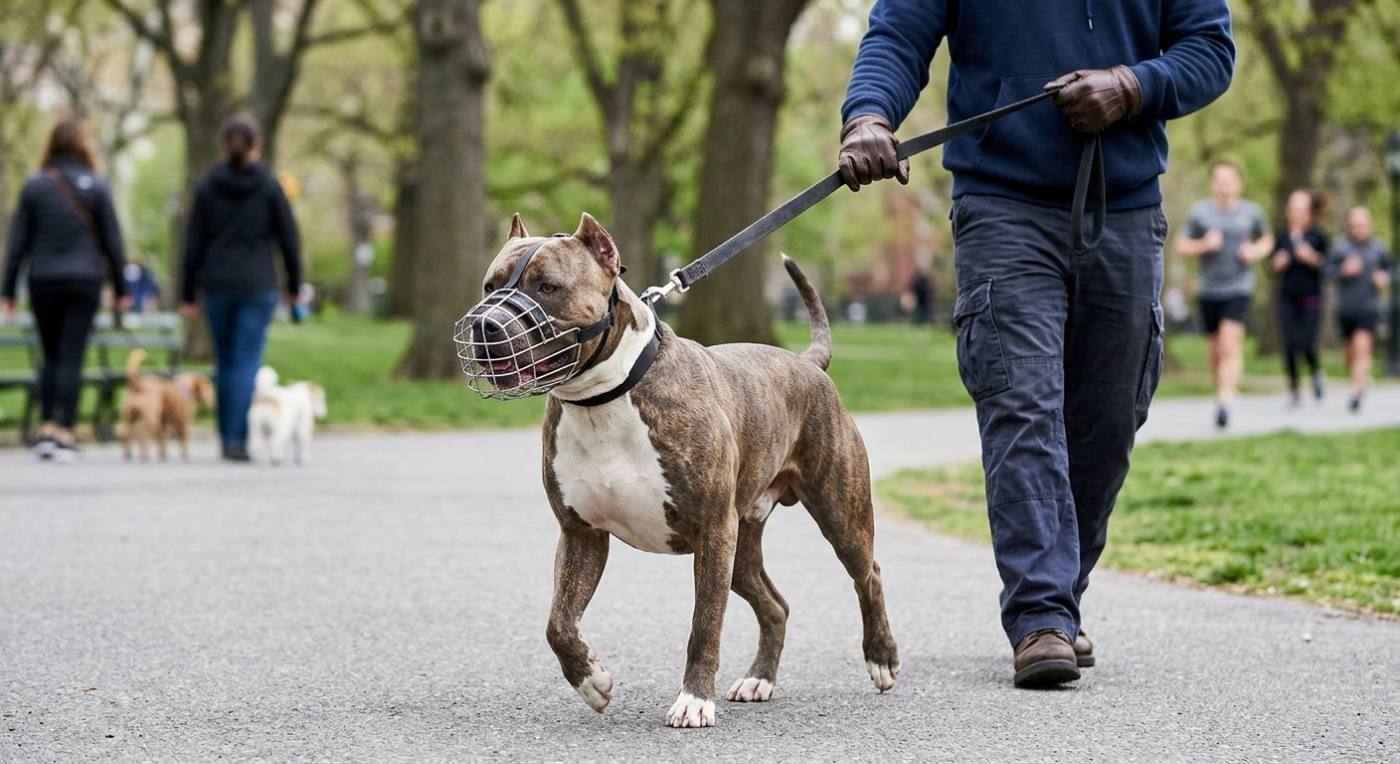
How rehabilitation works — safety first. Rehabilitation follows an order in which safety is never negotiable: safety, through environment and distance management and, where indicated, management tools, so nobody gets hurt during the process; regulation, lowering arousal and keeping the dog below the threshold at which it reacts; direction, giving the dog clear information about what to do instead of reacting; pressure and limits, communicating fairly and at the right moment what is acceptable; and obedience, only once the dog is emotionally available. Underneath, desensitisation and counter-conditioning change the association with the trigger, always at an intensity the dog tolerates. And, as in everything I do, the work is done in pairs: I rehabilitate the dog and teach the owner to train their dog safely.
Can an aggressive dog be fixed? In most cases, yes — with serious rehabilitation, aggression reduces very significantly and the dog gets back to a safe, balanced life. But there is an honest truth: cases with a bite history do not resolve on their own, nor with internet videos. They require professional assessment, a tailored plan and often long-term management. The earlier you intervene — ideally at the first growls and not at the first bite — the safer and faster the path.
When to seek professional help, without delay. Look for a professional immediately if your dog has already bitten or tried to bite, growls at people in the household, guards food or objects with tension, or has changed behaviour suddenly. Aggression is the area where the right intervention, early, makes all the difference — and where the wrong approach can make everything dangerous.
Frequently asked questions. Can an aggressive dog be cured? We talk about rehabilitation and management, not “cure”; the great majority improve a lot with the right work. Why did my dog suddenly become aggressive? Sudden behaviour changes often have a medical or pain cause, and in some cases trauma. Should I punish my dog when it growls? No. The growl is a valuable warning; punishing it teaches the dog to bite without warning. Is aggression about dominance? Almost never — current science links it to fear, frustration, defence or pain. Can I solve aggression on my own? Any case, even early on, needs professional assessment — it is the behaviour problem where going it alone carries the most risk.
Need help with an aggressive dog? If your dog shows aggression in Greater Lisbon, Cascais, Oeiras — or at a distance, with online coaching — the most important step is a professional behavioural assessment to identify the type, the cause and a safe plan.
Need help with your dog? André Alves works at home across Greater Lisbon and online worldwide.