Agressividade
Dog That Guards Food or Objects: How to Solve Resource Guarding
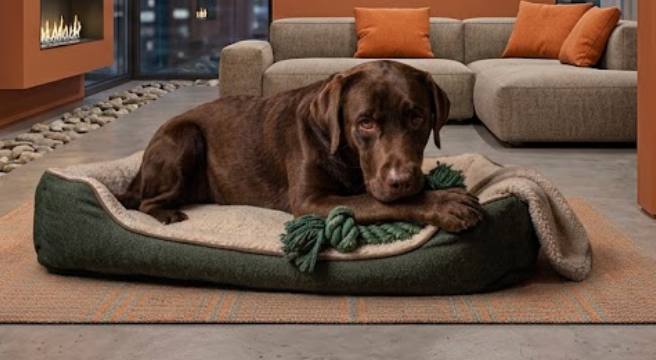
Resource guarding is when a dog growls, goes tense, bares its teeth or bites to defend something it values — food, toys, a bone, the bed or even a person. It is one of the most misunderstood behaviours: it looks like “bad temper”, but it is in fact natural and ancestral — in nature, whoever does not protect what they have does not survive. This matters because it changes everything about how to solve it: you don't fight it, you teach the dog to stop feeling it needs to defend.
Why your dog guards food or toys: natural instinct, because guarding resources is adaptive and some dogs carry it more strongly; insecurity and a history of scarcity, since dogs that went hungry, came from competitive litters or from deprivation tend to guard more; and learning — very often it is we who teach the dog to guard.
The mistake that creates the problem: taking things away from the dog. The old advice — “put your hand in the bowl so he knows who's in charge”, “take his food away to show who's the leader” — is exactly what creates resource guarding. If every time a person approaches the dog loses what it has, it learns a logical lesson: approach = threat, I have to defend faster. The growl that follows is the fault of that learning, not of the dog. And, as with any aggression, punishing the growl is dangerous: it teaches the dog to skip the warning and bite directly.
The logic of the solution: being approached becomes a good thing. Rehabilitation reverses the association. Instead of “when you come close, I lose”, the dog learns “when you come close, I gain something even better”. It is worked like this: safety and management first, avoiding triggering the guarding while we work, with the dog eating undisturbed and high-value items managed; distance and positive exchange, with approaches at a distance the dog tolerates, always followed by something good, closing the gap gradually; teaching “drop” and “swap”, so the dog learns that handing over pays off rather than costs; and no confrontation, because you never win this by force — you win it by changing how the dog feels. As always, I train the owner as much as the dog, because it is the family's daily life, at mealtimes and playtime, that consolidates or destroys the result.
Homes with children or other animals. If there are children or other animals at home, resource guarding requires immediate management while we work: separate, supervised meals, high-value items out of reach during shared time, and never letting a child approach the dog while it eats or has something valuable. Safety does not wait for rehabilitation — it has to be in place from the first symptoms, and the risk must always be zero.
Mistakes that make resource guarding worse: taking food or objects away “to get him used to it”, which teaches precisely the opposite; punishing the growl, which removes the warning and not the problem; chasing the dog that ran off with an item, which turns it into a game of defence and raises the item's value; and touching the bowl while the dog eats, creating tension where there was none.
Frequently asked questions. Why does my dog growl when I come near its food? Because it has learned that your approach can mean losing what it has. Should I take food away so my dog “respects” me? No — that is the mistake that most creates and worsens resource guarding. Can resource guarding be solved? Yes, in most cases, and it usually responds well when you work on the association instead of confronting; cases with a bite need professional assessment. My dog guards me from other people or dogs — is that the same thing? Yes — people can also be a guarded “resource”. Can I solve this on my own? Mild cases, with professional guidance, yes; where there is real tension or a bite, it is work for a professional assessment.
Need help with a dog that guards food or objects? If your dog defends food or toys and you live in Greater Lisbon, Cascais, Oeiras — or need online guidance — the first step is a 360º Assessment to design a safe plan.
Need help with your dog? André Alves works at home across Greater Lisbon and online worldwide.