
Medos
Dog Afraid of Fireworks, Thunder and Loud Noises: What to Do
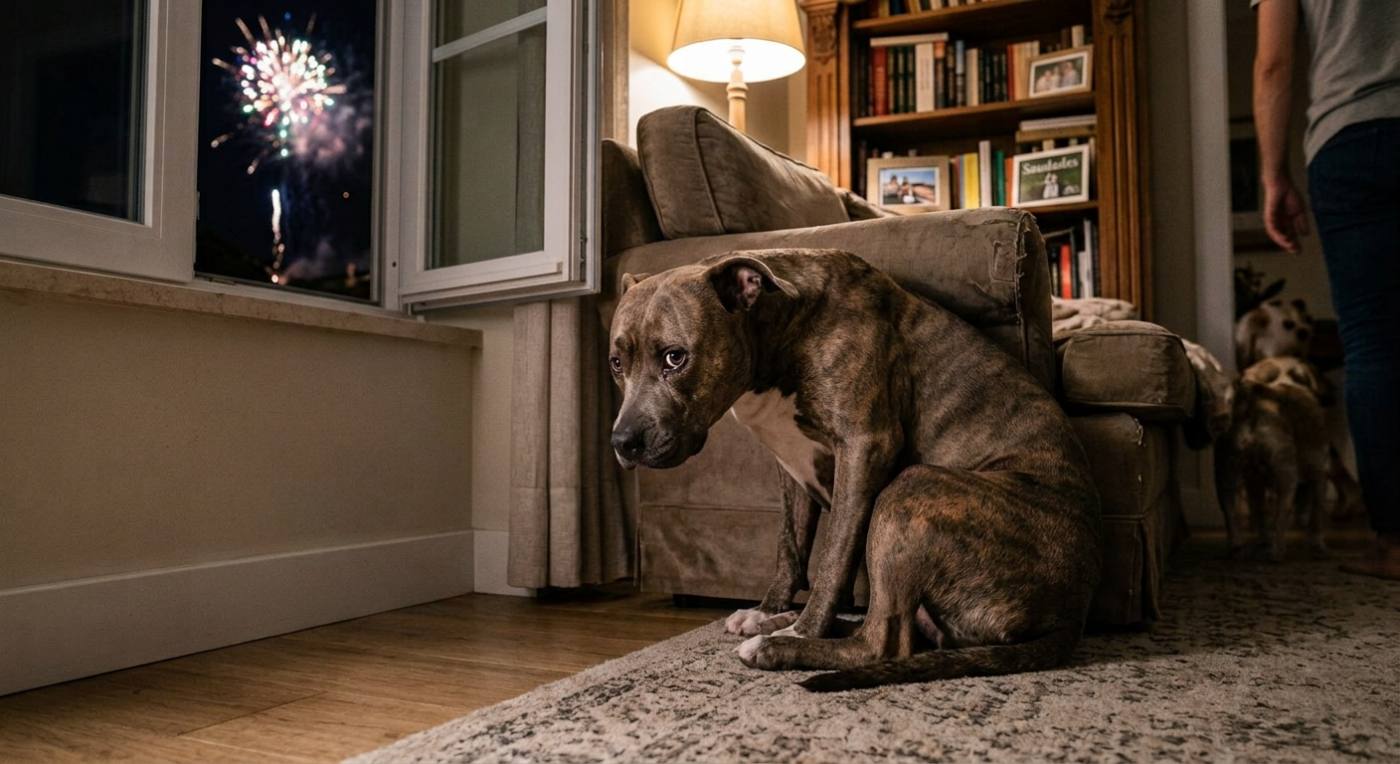
Fear of loud noises — fireworks, firecrackers, thunder — is one of the most common and most intense fears in dogs, and it is not attention-seeking: it is a real panic response, often physical. To a dog, a sudden bang is a threat it cannot predict, locate or understand. The good news is that there is a lot you can do — both in the moment, to protect the dog, and in the long run, to reduce the fear.
Why dogs are so afraid of noises: unpredictability, because unlike us the dog does not know fireworks are coming and the bang appears out of nowhere; far more sensitive hearing, so what is loud to us is deafening to the dog; they cannot locate the source, and the sound seems to come from everywhere, with no escape; and learned association, because after a big scare the fear generalises and gets worse year after year if nothing is done.
In the moment: how to protect your dog. When the noise is already happening, the goal is safety and comfort, not training. Create a safe refuge — an enclosed, dark, cosy space, an interior room or a “den” — and let the dog choose where it feels best. Muffle the sound, with windows and shutters closed, music or white noise to mask the bangs. Stay calm and available: your calm presence is an anchor and, if the dog seeks you out, giving comfort does not reinforce the fear; what you must not do is panic with the dog or force it to “face it”. Never punish fear. And make sure of physical safety: on firework nights, take extra care with doors and gates, because panic makes many dogs run — a collar with ID and an up-to-date microchip are essential.
Long term: reducing the fear. Outside the critical seasons, we work so next year is better: sound desensitisation, exposing the dog to recordings of thunder or fireworks at a very low volume and increasing gradually, always below the fear threshold; counter-conditioning, associating those sounds with very good things such as food and play; building baseline regulation and confidence, because a dog that is more secure overall copes better with scares; and, in severe cases, veterinary support to manage acute panic on specific nights. Starting this work weeks or months before the critical season is what makes the difference — not the day before.
Mistakes to avoid: punishing the dog for trembling, barking or hiding; forcing it out or to “face” the noise to get used to it; leaving it alone with no refuge on a firework night; only acting the day before, when desensitisation needs time; and being careless about escape, since badly closed gates and doors on panic nights are the main cause of lost dogs.
Frequently asked questions. Does comforting my dog during a thunderstorm reinforce the fear? No. Giving comfort and safety to a dog in panic does not reinforce fear. What do I do on firework night, at the last minute? Focus on protection: safe refuge, muffled sound, calm presence and extra care against escapes. Does noise fear get worse with age? It can get worse each season if nothing is done, because the negative association keeps building. Does sound desensitisation really work? Yes, when done with method — very low volume, gradual progression and always below the panic threshold. My dog gets so bad that nothing works, are there other options? Severe cases can benefit from veterinary support to manage acute panic, combined with training guided by a specialist.
Need help with a dog that panics at noises? If your dog suffers with fireworks, thunder or loud noises and lives in Greater Lisbon, Cascais, Oeiras — or needs online guidance — the ideal is to start the work well before the next critical season.
Need help with your dog? André Alves works at home across Greater Lisbon and online worldwide.