Ansiedade de separação
Separation Anxiety in Dogs: Signs, Causes and Treatment
Separation anxiety is real suffering that some dogs feel when left alone or separated from the person they are bonded to — it is not a tantrum, stubbornness or “revenge”. The dog that barks non-stop, destroys the door, toilets indoors or howls the moment you leave is not doing it to annoy you: it is in panic. Understanding this changes everything, because it is not solved with punishment — it is solved by teaching the dog that being alone is safe.
What separation anxiety is (and isn't). Not every dog that destroys something has separation anxiety. The difference is in the emotional state and the timing: separation anxiety is triggered by the absence and comes with panic. A dog that chews the sofa out of boredom, or wees indoors for lack of toilet training, is something else — and is treated differently. The first step is always to distinguish what is really going on; that is why the 360º Assessment matters so much.
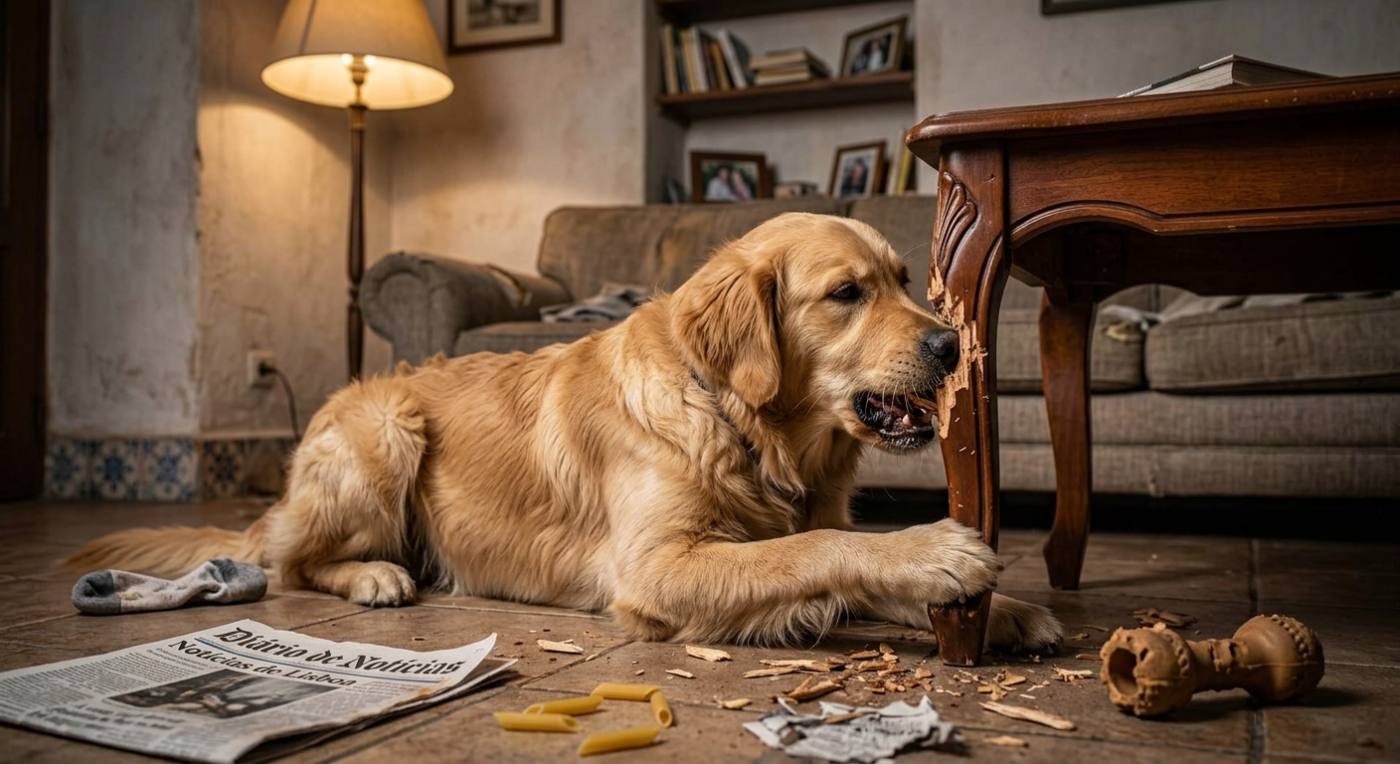
Signs of separation anxiety. They usually begin before the person leaves, because the dog “reads” the departure rituals — picking up keys, the coat — and concentrate in the first minutes of absence: persistent barking, howling or whining; destruction, especially at doors, windows and exit points; toileting indoors even when trained; pacing, drooling, panting, trembling; escape attempts, sometimes with risk of injury; and “sticking” to the person at home, becoming agitated when they get ready to leave.
Why a dog develops separation anxiety: abrupt routine changes, with the return to work after long periods at home a classic trigger; lack of habituation to being alone, especially in puppies that never learned gradually; changes in the environment, such as moving house, a family member leaving or the loss of another pet; excessive dependence on one single person; and temperament and history, since more insecure dogs, or dogs with a past of abandonment and kennels, tend to be more vulnerable.
How separation anxiety is treated. There are no shortcuts and no one-day fixes — but there is a clear path, and it works: management while we work, avoiding wherever possible leaving the dog alone beyond what it tolerates, so panic is not repeated, because every episode reinforces the problem; breaking the association with departure rituals, desensitising cues like keys and coat so they no longer announce abandonment; gradual habituation to being alone, increasing absence time in very small steps, always below the panic threshold; building independence and regulation, teaching the dog to be calm and relaxed even with the person present but unavailable; and, in severe cases, combined veterinary and behavioural support. And, as in all my work, I train the owner as much as the dog: separation anxiety is solved in the daily life of the home, in the leaving and the coming back, and it is the family that carries out the training every day.
Mistakes that make separation anxiety worse: punishing the destruction or the crying, which increases insecurity and makes everything worse; dramatic goodbyes and returns, which reinforce the emotional weight of departures; going from zero to hours alone all at once, which guarantees relapse; and assuming “he just needs to get used to it” and leaving the dog in panic day after day, which consolidates the problem instead of solving it.
Frequently asked questions. How do I know if my dog has separation anxiety or is just bored? Separation anxiety comes with panic and is triggered by the absence, often in the first minutes and linked to departure rituals; boredom is more diffuse and without signs of stress. Can separation anxiety be cured? In most cases it improves a great deal with a well-run, consistent habituation plan. Does getting another dog solve it? Rarely — it is usually a bond to a specific person, not a lack of canine company. How long does treatment take? Mild cases can improve in weeks; severe cases take months of gradual work. Can I let him cry until he gets used to it? No. Repeatedly leaving the dog in panic reinforces the anxiety instead of solving it.
Need help with a dog with separation anxiety? If your dog suffers when left alone and you live in the Greater Lisbon area, Cascais, Oeiras — or need online guidance — the first step is a 360º Assessment to confirm the diagnosis and design a personalised plan.
Need help with your dog? André Alves works at home across Greater Lisbon and online worldwide.