Medos
Dog Afraid of People or of the Street: How to Help
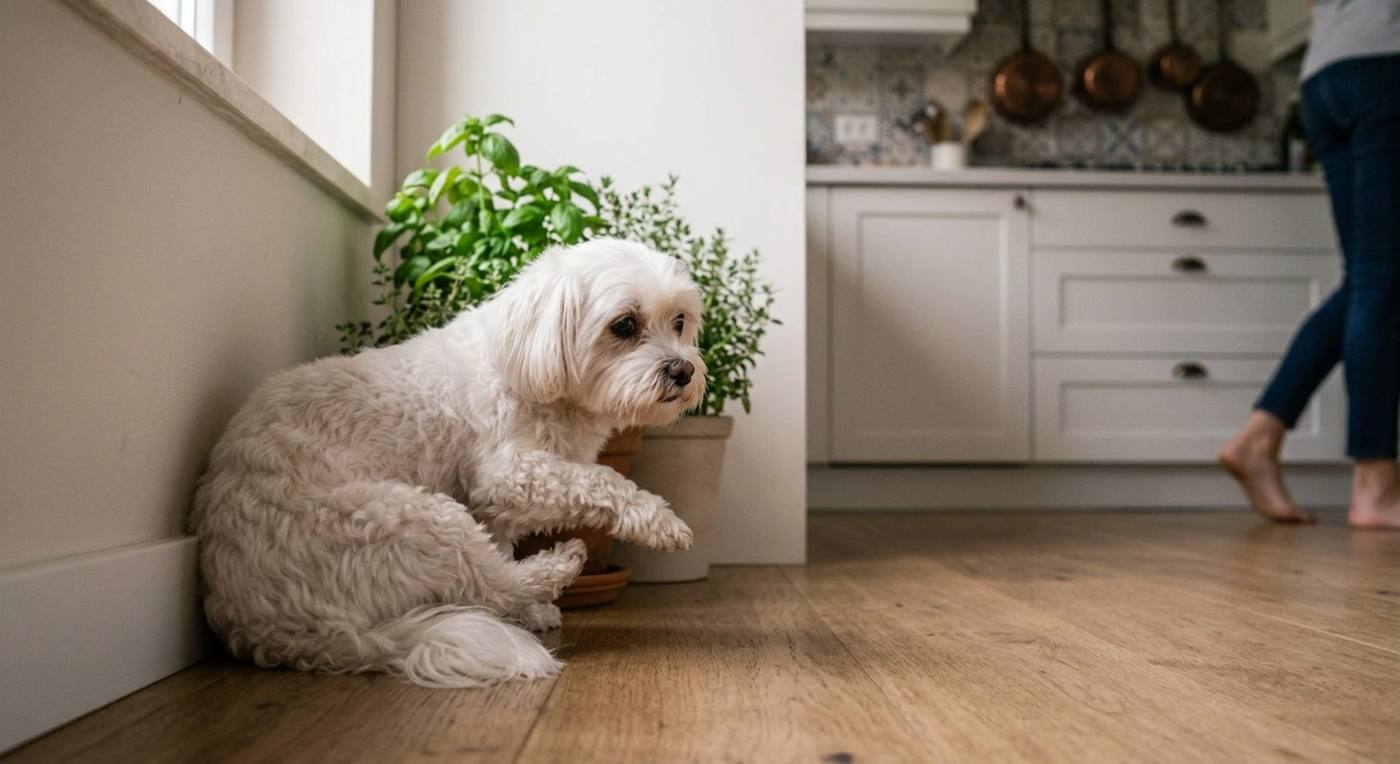
A dog that is afraid of people, of strangers or of going outside is not stubborn or “difficult” — it is a dog that has not yet learned that the world out there is safe. It may crouch, pull towards home, refuse to walk, tremble at the sight of people, or — when the fear tightens — bark and lunge to drive away what scares it. Helping it is not dragging it into the street by force; it is rebuilding confidence in small steps, at the dog's pace, until the world stops being a threat.
How it shows up: refusing to leave the house or to move away from the door; pulling to go back mid-walk, tail low; crouching, trembling or freezing at the sight of people or on reaching busy areas; hiding behind the owner and fleeing from anyone who approaches; barking or lunging at strangers — active fear, often mistaken for aggression.
Why a dog fears people or the street: lack of socialisation as a puppy, without positive experiences with a variety of people and urban environments; a past of kennels, rescue or deprivation, in which the outside world is literally unknown; a bad experience, such as a scare in the street or a negative encounter with a person; confinement during the critical window, in dogs that grew up without going out enough; a sensitive temperament, or a medical cause and pain that lower tolerance.
How to help — without forcing. The rule is the same as with all fears: never go past the threshold, never force. Dragging a frightened dog into a crowd usually cements the trauma and can create defensive aggression. Start where the dog feels safe — that may be the front door, or a quiet street at a quiet hour. Distance is your tool: work with people at the distance at which the dog sees them without stress, closing the gap very gradually across sessions. Change the association, making the appearance of people predict something good, food or play. Give choice and control: let the dog decide to approach and never let strangers move in on it — a dog that can back away gains confidence faster. Quality, predictable walks, with a calm pace and time to sniff. And the golden rule with strangers: no “let him sniff your hand” held out over the head; ignoring the dog is often what reassures it most.
Mistakes that make it worse: dragging the dog by the leash to force it to walk or approach; letting strangers “pet” a frightened dog; walking only in chaotic areas too soon, because above threshold you train the fear; being in a hurry, when street confidence is built over weeks of small wins; and punishing the dog for stopping, trembling or barking out of fear.
Frequently asked questions. How do I help a dog that refuses to go outside? Start where it feels safe — even if that is just the front door — and progress in tiny steps, pairing each bit of progress with something good. My dog is afraid of strangers, should I ask them to pet him? No. Forcing contact makes the fear worse; the best thing a stranger can do is ignore the dog. Can fear of people turn into aggression? Yes — a frightened dog that learns barking or lunging drives people away can develop defensive aggression. How long does it take? Dogs with a socialisation gap but no trauma progress in weeks; deeper cases take months of gradual work.
Need help with a dog that is fearful in the street or around people? If your dog suffers on walks or avoids the world and lives in Greater Lisbon, Cascais, Oeiras — or needs online guidance — the first step is a 360º Assessment to understand the origin of the problem and build a plan at your dog's pace.
Need help with your dog? André Alves works at home across Greater Lisbon and online worldwide.