Ansiedade de separação
How to Get Your Dog Used to Being Alone (Step by Step)
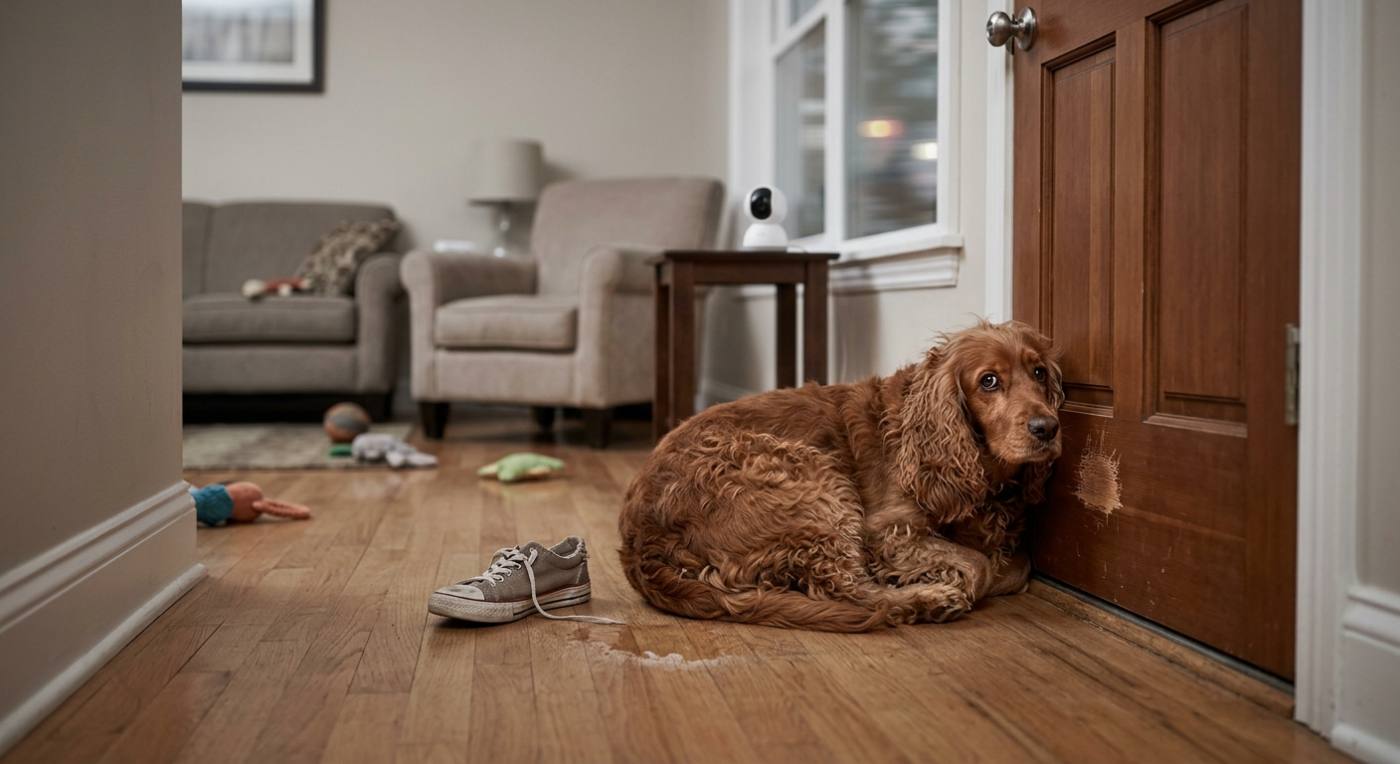
Teaching a dog to be alone means teaching it, in very small steps, that your absence is safe and temporary — never throwing it into hours of solitude and hoping it “gets used to it”. There is one golden rule: never exceed the time the dog can tolerate without going into stress. Every time the dog is in panic, the problem is reinforced; with every calm absence, confidence is built. That is where everything is decided.
Before you start: the two rules that are never broken. Progress at the dog's pace, not yours — progress is measured by the dog's calm, not by the clock; if it gets stressed, you moved too fast, go back a step. Never leave the dog alone beyond what it can handle while you are training: if you need to be out longer than the dog already tolerates, arrange management (someone to stay, daycare, a dog sitter). One episode of panic erases days of progress.
Step 1 — Teach it to relax alone in your presence. Before you leave the house, the dog has to know how to be calm in a place (bed, mat) while you are present but unavailable. Reward calm. It is the foundation of everything.
Step 2 — Create distance inside the house. Move to another room for seconds and come back before the dog gets restless. Repeat, varying the time. The dog learns that you go away and always come back — with no drama.
Step 3 — Neutralise the departure rituals. Pick up the keys, put on the coat, touch the door handle… and don't leave. Repeat until those cues stop triggering anxiety. It is one of the most important steps and the most forgotten.
Step 4 — Very short departures. Actually go out the door for seconds and come back before the stress. Increase the time in small increments — seconds, then minutes — always below the panic threshold.
Step 5 — Increase gradually. Extend the duration irregularly (not always upwards), so the dog cannot “predict” when it gets harder. Reaching long absences is the sum of many successful short ones.
Step 6 — Arrivals and departures without emotion. Leave and come in calmly, with no dramatic goodbyes or greetings. The more ordinary the moment, the less emotional weight it carries for the dog.
What helps the process: burning energy beforehand — a dog that has had a good decompression walk is more inclined to rest; some enrichment as you leave, something good to chew or lick, helps associate your departure with something positive; a safe, comfortable space, associated with calm; and consistency from the whole family, because everyone has to follow the same script.
Mistakes that undo the work: being in a hurry and skipping steps, with relapse guaranteed; long goodbyes and euphoric returns; punishing what you find on arrival, since the dog does not connect the punishment to what it did hours earlier and only becomes more insecure; and continuing to go out for hours while training, “because there's no alternative” — without management, the method does not work.
Frequently asked questions. How long does it take to get a dog used to being alone? It depends on the starting point: a puppy with no trauma can adapt in weeks; a dog with established separation anxiety takes longer and smaller steps. The pace belongs to the dog. Can I let the dog cry until it stops? No. Leaving the dog in panic reinforces the anxiety; all the work is done below the threshold at which it gets stressed. From what age can I teach a puppy to be alone? The earlier the better — gradually and positively. Preventing is far easier than rehabilitating later. Does a camera help? Yes, to see the exact moment the dog starts to stress and adjust the timings. And if I really have to be out for many hours during the training? Arrange management on those days (dog sitter, daycare, family); every long absence in panic erases progress.
Need help getting your dog comfortable alone? Whether it is prevention in a puppy or rebuilding the confidence of a dog that is already suffering, if you live in Greater Lisbon, Cascais, Oeiras or anywhere else in the world, a 360º Assessment is the starting point for building the right plan at your dog's pace.
Need help with your dog? André Alves works at home across Greater Lisbon and online worldwide.